

Coins at Carchemish provide window into first-century Judea
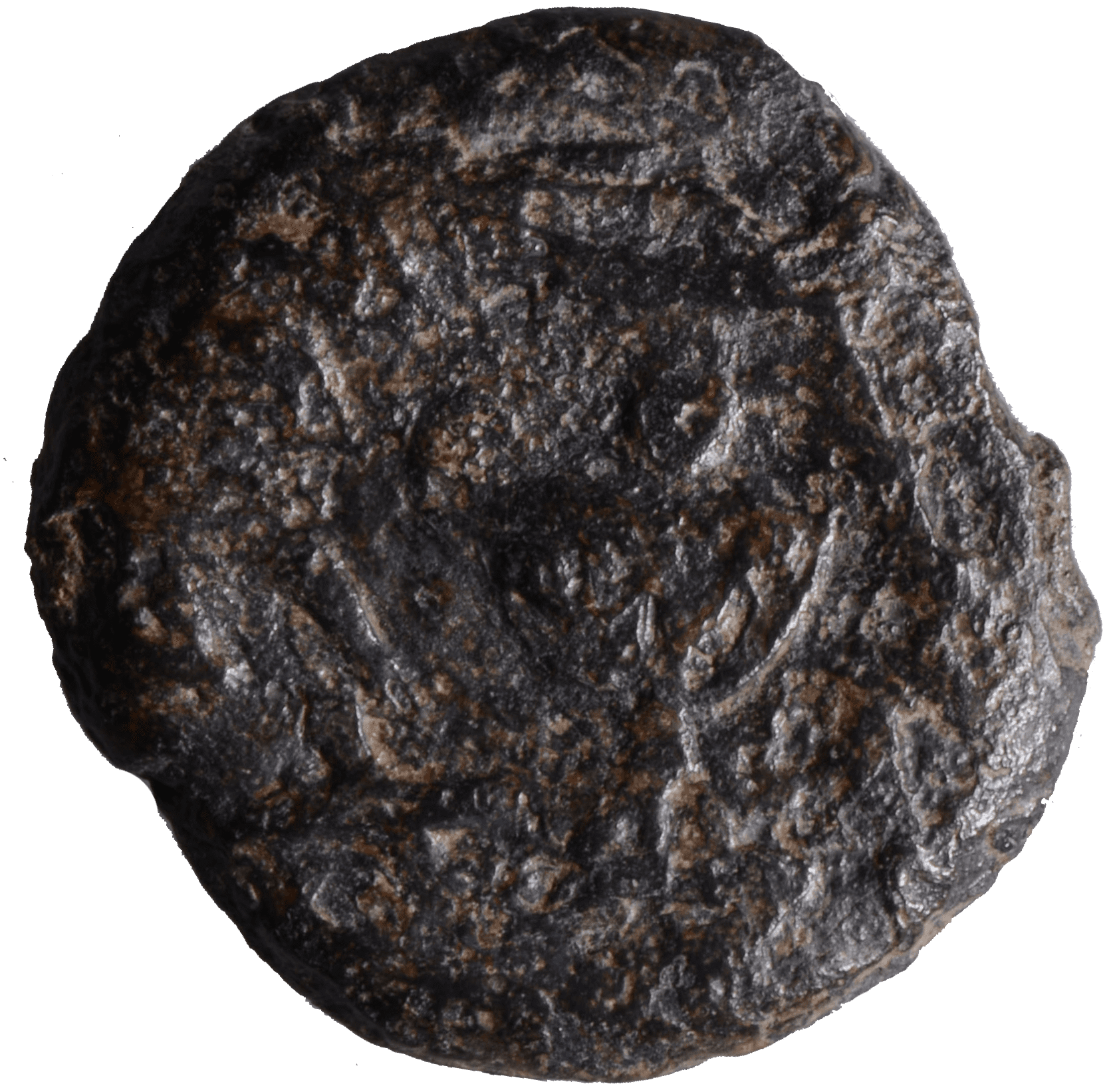
Bronze Judean coin from the First Jewish Revolt found at Carchemish in southeastern Turkey, bearing an amphora. Courtesy Aliye Erol via the Karkemish Excavation Archive.
Two coins from the First Jewish Revolt (66–74 CE) have been found among the numismatic material excavated at Carchemish. Located on the Euphrates River in southeastern Anatolia, near the modern Turkish–Syrian border, Carchemish was a strategically important settlement occupied from the Bronze Age through late antiquity. The presence of these coins attests to tensions within the Jewish communities of the early Roman Empire over allegiance and authority—tensions the gospel tradition suggests were already taking shape a generation earlier, in Jesus’s time. When asked whether it was lawful to pay taxes to Caesar, Jesus famously replies: “Render unto Caesar the things which are Caesar’s, and unto God the things that are God’s” (KJV, Matthew 22:21; Mark 12:17; Luke 20:25).

A total of 297 coins were recovered during the excavation campaigns conducted between 2011 and 2024 and are now housed in Turkey’s Gaziantep Archaeological Museum. Due to corrosion and metal deterioration—most of the coins being bronze—only about half of the assemblage could be securely identified, a common challenge in numismatic material. The identifiable coins are predominantly Roman (provincial and imperial), but the collection also includes examples from the Hellenistic, Byzantine, and Islamic periods. This long chronological range is complemented by a wide geographical distribution of mints, with a particularly strong representation from Antioch. Based on her study of the coin material, Aliye Erol, a professor of ancient history at Istanbul University, concludes from the evidence that Carchemish was a continuously occupied and well-connected site.
The First Jewish Revolt arose in Judea from a mix of Roman administrative abuse, heavy taxation, and religious conflict. The revolt produced distinctive coinage issued under the Jerusalem Temple authorities. Struck in bronze and silver, these coins intentionally avoided Roman imperial imagery, instead using aniconic symbols such as amphorae, vine leaves, palm branches, and ritual vessels. They assert a counter-sovereignty grounded in religious and cultural self-definition.
The Jewish Revolt coins from Carchemish are of the amphora/vine branch type, emphasizing agricultural fertility and Temple ritual. Although their inscriptions are illegible, such coins normally read “Jerusalem the Holy” or “Freedom of Zion.” Their presence so far from Judea suggests circulation through broader monetary networks, likely via military movement, trade, or displacement during and after the conflict.
In the Roman world, tax payment was tied to imperial authority and the cultic honor of the emperor, even when direct worship was not expected of every individual. Imperial imagery on coins functioned as a constant reminder of Rome’s supremacy, creating particular tension for Jews whose religious laws prohibited images. There was a third coin from Judea found at Carchemish that seems to mitigate that concern. The coin is heavily worn but tentatively attributed to the procurator Valerius Gratus (15–26 CE), Pilate’s predecessor. Gratus’s tenure is often described as stable, and coins from his period commonly avoided imperial portraits. The coin seems to reflect the routine circulation of Roman coinage in Judea prior to the revolt.
This background sharpens the meaning of both the Jewish revolt coinage and Jesus’s “render unto Caesar” statement in the Gospels. The tax question posed to Jesus was a political trap. If he rejected the tax, he risked being accused of sedition. If he accepted it, he risked appearing to endorse emperor worship and collaboration with Rome. His response reflects the complex reality of Roman rule in Judea, where religion, politics, and economics were inseparable. The revolt coins represent a later, more concrete response to the same underlying question: how to be Jewish under an empire that claimed absolute authority.